Understanding Green Design Principles for Modern Urban Living
Green design apartments are residential buildings intentionally designed to minimize environmental impact while maximizing resident health and comfort through energy efficiency, water conservation, sustainable materials, and improved indoor air quality.
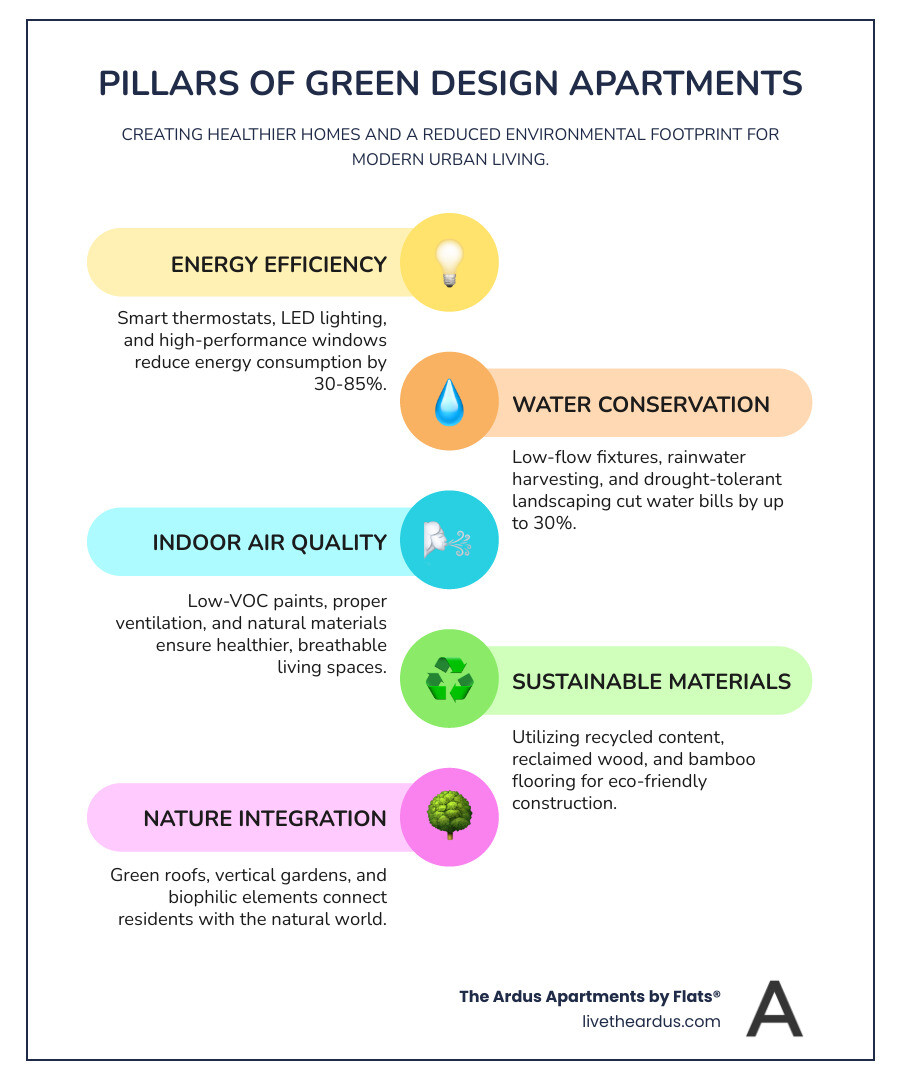
Key principles of green apartment design:
- Energy Efficiency - Smart thermostats, LED lighting, high-performance windows, and Energy Star appliances that reduce electricity consumption by 30-85%
- Water Conservation - Low-flow fixtures, rainwater harvesting, and drought-tolerant landscaping that can significantly reduce water usage
- Indoor Air Quality - Low-VOC paints, proper ventilation systems, and natural materials that create healthier living spaces
- Sustainable Materials - Recycled content, reclaimed wood, bamboo flooring, and other eco-friendly building components
- Nature Integration - Green roofs, vertical gardens, and biophilic design elements that connect residents with the natural world
Urban living has become synonymous with concrete and steel, but there's a growing movement to change that. Studies consistently show that exposure to nature reduces stress, improves focus, and improves overall well-being. Green design takes these insights and applies them to apartment living, creating spaces that are not just environmentally responsible but genuinely better places to live.
The benefits extend beyond environmental responsibility. LEED-certified buildings often have higher occupancy rates. For someone seeking a vibrant city lifestyle, green apartments offer modern amenities and stylish spaces, plus the bonus of a healthier home environment.
Think of green design as building smarter, not just greener. It's about using technology like smart thermostats and LED lighting alongside natural strategies like maximizing daylight and incorporating plants. The result is an apartment that feels more comfortable year-round and supports both personal health and the planet's health simultaneously.
The Dual Benefits of Green Living: For You and the Planet
Living in a green design apartment means embracing a lifestyle where daily choices contribute positively to both personal well-being and the planet's health. It's a harmonious blend of modern convenience and environmental stewardship, creating a healthier home environment while significantly reducing the ecological footprint.
Enhancing Resident Well-being
Homes can be sanctuaries, and green design elevates this concept by prioritizing the health and comfort of residents. One of the most immediate benefits is improved indoor air quality. Traditional building materials and paints can off-gas volatile organic compounds (VOCs), leading to poorer air quality. However, green design apartments often use low-VOC paints and non-toxic materials, ensuring the air breathed indoors is cleaner and healthier. Many also integrate advanced HEPA air filtration systems, which capture 99.97% of particles 0.3 microns or larger, significantly reducing allergens and pollutants.
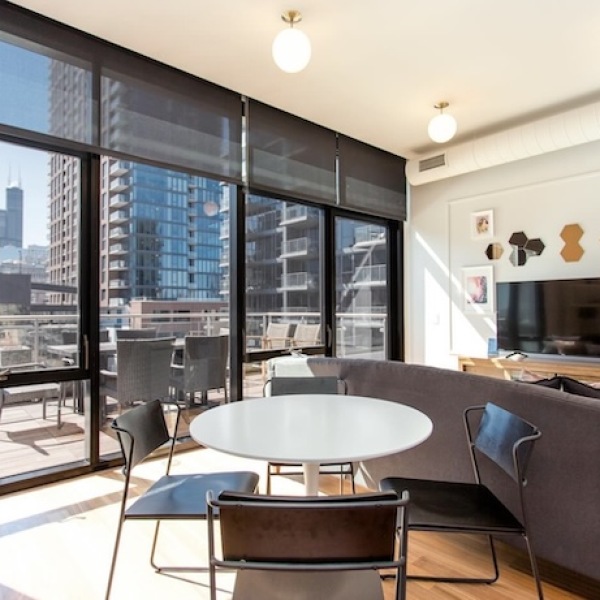
Natural light, or daylighting, is another cornerstone of green design, known to enhance mood and productivity. Large, strategically placed windows maximize sunlight, reducing the need for artificial lighting during the day and connecting residents to the outside world. Imagine starting your day bathed in natural light – it's a wonderfully refreshing experience!
This connection to nature extends into biophilic design, which incorporates elements like indoor plants and natural patterns. Studies consistently show that exposure to nature reduces stress, improves focus, and improves overall well-being. Even in compact urban spaces, features like vertical gardens or strategically placed houseplants can bring the calming influence of the outdoors inside.
Beyond air and light, green design focuses on thermal and acoustic comfort. High-performance windows and superior insulation, often found in Passive House certified buildings, ensure that apartments maintain a comfortable temperature year-round without excessive energy use. These features also act as excellent sound barriers, creating a quieter, more peaceful living space. It's about crafting an environment where residents feel truly at ease. For more insights into how modern living can improve a lifestyle, explore more info about modern living Chicago.
Reducing Environmental Impact
Choosing a green design apartment is a powerful way to reduce environmental impact, making a tangible difference for the planet.

One of the most significant contributions comes from energy consumption reduction. Green buildings are engineered to be incredibly efficient. For instance, Passive House buildings use an astounding 85% less energy than traditional buildings. This translates to a dramatically lower carbon footprint for each resident. This efficiency is achieved through super-insulation, airtight construction, and efficient heating and cooling systems like Energy Recovery Ventilation (ERV), which exchanges heat and moisture between air streams to minimize energy loss.
Water conservation is equally vital. Low-flow plumbing fixtures, for example, can reduce water usage. Beyond individual units, many green apartment communities implement rainwater harvesting systems, which reduce the volume of water handled by city sewers during storms, and greywater recycling for irrigation. Drought-tolerant landscaping and porous paving further minimize water usage and manage stormwater runoff effectively.
The materials used in green construction also play a crucial role. Techniques like mass timber construction, which uses engineered wood panels, store carbon captured during tree growth, offering a sustainable alternative to carbon-intensive steel and concrete. Building with these environmentally preferable products contributes to a lower embodied carbon footprint for the entire building. Finally, green design encourages waste reduction through robust recycling programs and sustainable site management practices, supporting local biodiversity through features like green roofs that provide habitats for urban wildlife. It’s a holistic approach to living lightly on the earth.
Key Features of Modern Green Design Apartments
Modern green design apartments are marvels of innovation, blending cutting-edge technology with thoughtful design to create spaces that are both luxurious and environmentally conscious. Green living is a comprehensive approach that touches every aspect of a building, from the energy powering the lights to the water flowing from the taps.
Energy-Efficient Systems and Technologies
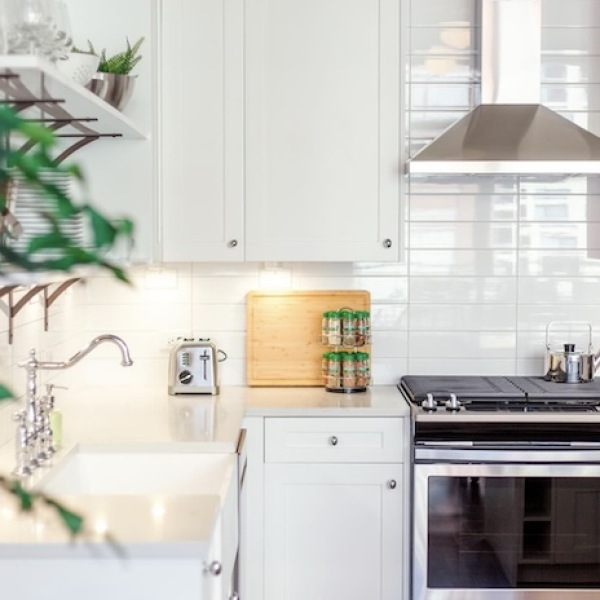
The heart of any green apartment lies in its ability to conserve energy. Smart thermostats, like Nest, allow residents to remotely manage energy use by learning habits and optimizing temperature settings. This isn't just convenient; it's smart for the planet. Kitchens are typically equipped with Energy Star certified appliances, which are designed to significantly reduce energy consumption.
Lighting is another area where green design shines. LED lighting can save 30-50% more energy than fluorescent lighting and even more compared to incandescent bulbs. Occupancy-sensing lighting controls ensure that lights are only on when a space is in use, further minimizing waste. High-performance windows, often dual-pane with low-e coatings, are crucial. They provide superior insulation, keeping heat in during winter and out during summer, while also reducing noise.
Some cutting-edge green apartments integrate solar panel systems, sometimes even dedicating panels to individual units, allowing residents to generate clean energy and even feed excess back to the utility grid. For heating and cooling, some buildings feature geothermal systems, which use the earth's consistent temperature to efficiently regulate indoor climates, or Energy Recovery Ventilation (ERV) systems that recover heat and moisture from outgoing air to pre-condition incoming fresh air, reducing the load on HVAC systems. Passive House construction, a global standard, aims for such airtight and energy-efficient buildings that they require very little space heating and cooling, achieving energy savings exceeding 75% compared to conventional buildings.
Water Conservation and Management
Water is a precious resource, and green design apartments are engineered to use it wisely.

One of the most common and effective features are low-flow plumbing fixtures in bathrooms and kitchens. These include low-flow showerheads, faucet aerators, and high-efficiency toilets that use significantly less water per flush without sacrificing performance. These small changes add up to substantial water savings.
Beyond the individual unit, many green communities implement rainwater harvesting systems, collecting and storing rainwater for irrigation or other non-potable uses. Greywater recycling systems can also be found, treating water from sinks and showers for reuse in landscaping or toilet flushing, further reducing demand on municipal water supplies.
Outside the building, drought-tolerant landscaping is often seen, utilizing native plants that require minimal irrigation. This not only conserves water but also supports local ecosystems. Porous paving in parking areas and walkways allows rainwater to percolate naturally into the ground rather than running off into storm drains, helping to replenish groundwater and reduce urban runoff pollution.
Sustainable Materials and Smart Spaces
The materials that make up a home matter, and green design apartments prioritize those with a minimal environmental footprint. Recycled content materials are often used in everything from insulation to countertops, and reclaimed wood for flooring or decorative accents gives new life to old resources. Flooring options like bamboo and cork are popular, known for their rapid renewability and durability. Low-VOC (Volatile Organic Compound) paints are a must, ensuring healthier indoor air quality by reducing harmful chemical emissions.
Green roofs and vertical gardens are increasingly common, especially in dense urban environments like Chicago. These living architectural features not only add a touch of nature and beauty but also provide insulation, reduce stormwater runoff, and help cool the surrounding area. They demonstrate how green design principles can be beautifully applied to small urban spaces and compact apartments, changing balconies and rooftops into lush, functional areas. It's about integrating vegetation into even the smallest urban residences, reimagining how greenery can be incorporated into apartment design.
For apartments with a unique flair, these sustainable materials can contribute to truly distinctive living spaces. Find more about apartments with character that blend historical charm with modern, eco-conscious features.
Understanding Green Building Standards and Certifications
Green design apartments are not just a vague concept; there are rigorous standards and certifications that ensure buildings meet specific environmental and performance criteria. These certifications provide a framework for excellence, guaranteeing that homes are truly sustainable and high-performing.
What are the leading green design apartment certifications?
Several prominent certifications guide and recognize green building efforts:
- LEED (USGBC): Leadership in Energy and Environmental Design is perhaps the most recognized green building certification program worldwide. It evaluates buildings based on a points system across various categories like sustainable sites, water efficiency, energy and atmosphere, materials and resources, and indoor environmental quality. Depending on the points earned, a building can achieve Certified, Silver, Gold, or Platinum status. LEED-certified buildings have shown higher occupancy rates and can use about 15 percent less energy.
- PHIUS+ Passive Building Standard: This standard focuses on creating ultra-low energy buildings that require minimal heating and cooling. Passive House construction emphasizes airtightness, super-insulation, high-performance windows, and heat recovery ventilation. Buildings meeting this standard can achieve energy savings exceeding 75% compared to conventional buildings, leading to significantly reduced space heating and cooling needs.
- Green Globes: This is another comprehensive green building rating system that assesses environmental performance throughout a building's lifecycle. It covers seven areas: energy, water, indoor environment, resources, emissions, project management, and site.
- Living Building Challenge: Often considered one of the most rigorous standards, the Living Building Challenge pushes for regenerative design. It requires buildings to be net-zero energy and net-zero water, meaning they generate all their own energy and treat all their own water on-site. It's a challenging but incredibly impactful certification.
- ENERGY STAR Multifamily High Rise: This program, managed by the EPA, provides a national standard for energy-efficient multifamily buildings. It focuses specifically on energy performance, requiring buildings to be 15% more energy efficient than code requirements.
How Certifications Influence Design
These certifications are more than just plaques on a wall; they profoundly influence how green design apartments are conceived, built, and operated.
Firstly, they set clear performance benchmarks. Instead of vague aspirations, developers and architects have concrete targets for energy use, water consumption, and indoor air quality. This drives innovation and encourages the adoption of advanced technologies and materials.
Secondly, certifications promote an integrated design process. This means that architects, engineers, and contractors collaborate from the very beginning of a project, considering how all building systems and components work together to achieve optimal environmental performance. This "Whole Building Design Approach" is far superior to traditional sequential design decisions, ensuring that all principles are balanced, not just one area.
Thirdly, third-party verification provides accountability and credibility. When a building is certified, it means an independent organization has reviewed its design and construction, confirming that it meets stringent standards. This gives residents confidence in the building's green credentials.
Certifications also encourage innovation by pushing the boundaries of what's possible in sustainable construction. They act as a catalyst for developers and architects to explore new technologies and design strategies. Finally, these standards often influence building codes. As green building becomes more mainstream, elements of voluntary certifications find their way into mandatory regulations. Organizations like the International Code Council release codes addressing energy efficiency and green construction, constantly evolving to meet higher standards. These codes, such as the International Energy Conservation Code (IECC) and ASHRAE 90.1, establish minimum requirements, while "reach codes" or "stretch codes" encourage even higher performance.
The Future of Sustainable Urban Living
The commitment to green design apartments extends far beyond the walls of individual units, shaping the very fabric of urban landscapes and envisioning a more sustainable future for city living. It's an exciting time where environmental responsibility meets thoughtful urban development.
The Role of Architects and Developers
Architects and developers are the visionaries behind the widespread adoption of green design. They play a pivotal role in promoting innovation, constantly seeking new ways to integrate sustainable practices into apartment buildings. There is a shift towards a "Whole Building Design Approach," where every aspect of a project, from site selection to material choices, is considered through an environmental lens. This integrated approach ensures that buildings are not just green in isolated features, but holistically sustainable.
Scaling up green construction presents unique challenges. However, the opportunities are immense. Developers are increasingly embracing methods like mass timber construction, which uses engineered wood panels. This not only stores carbon but also allows for quicker assembly, demonstrating a forward-thinking approach to construction. The industry is constantly working to overcome these challenges, recognizing that the long-term benefits for residents and the community are substantial.
Community-Wide Impact and Amenities
The principles of green design often extend beyond the individual building to foster broader community well-being. Green design apartments frequently prioritize locations that offer proximity to public transit, reducing reliance on cars and lowering the collective carbon footprint. Walkable neighborhoods, rich with amenities and services, are highly desirable, encouraging a more active and connected lifestyle.
For those who prefer two wheels, apartments with bike storage are becoming a standard feature, promoting cycling as a healthy and eco-friendly mode of transportation. There is also the integration of electric vehicle (EV) charging stations, supporting the transition to cleaner personal transport.
Beyond transportation, many green apartment communities cultivate a sense of shared responsibility and connection through amenities like community gardens. These spaces not only provide fresh, local produce but also foster social interaction among residents. Robust on-site recycling programs make it easy for residents to manage waste responsibly, further reducing landfill contributions. It's all part of creating a vibrant, sustainable, and interconnected living environment. To find more about the shared spaces and features that improve apartment living, explore apartment community amenities.
Frequently Asked Questions about Green Design Apartments
Stepping into green design apartments might bring up a few questions. Here are answers to some of the most common inquiries about this innovative living option.
What is the main difference between a 'green' apartment and a standard one?
The main difference lies in intentional design and performance. A green apartment is holistically designed for high performance, focusing on energy and water efficiency, superior indoor air quality, and the use of sustainable materials from the outset. This contrasts with standard construction, which may not prioritize these elements to the same degree. In a green apartment, every component, from the windows to the ventilation system, is chosen and integrated to minimize environmental impact and maximize resident comfort and health. For example, a green apartment might feature a Passive House standard, using 85% less energy than a traditional building, a significant difference from a standard apartment.
Do green apartments require special maintenance from residents?
Generally, no. Green apartments are designed for efficiency and ease of use, often simplifying daily living. Maintenance often involves standard practices, though residents may be educated on how to best use features like smart thermostats or energy-efficient appliances to maximize benefits. For instance, understanding how to program a smart thermostat to optimize energy use when away is a simple step that yields great rewards. The goal is to make sustainable living effortless and integrated into daily routines, not to add extra chores.
How does biophilic design improve apartment living?
Biophilic design incorporates natural elements like plants, natural light, and organic materials into living spaces. This connection to nature is proven to reduce stress, improve cognitive function, and improve overall happiness and well-being. Imagine living in a space that incorporates vertical gardens, uses natural wood finishes, and maximizes daylight – these elements create a calming, rejuvenating atmosphere. Even small details, like having houseplants, can purify the air and contribute to a cooler environment in summer and more humidity in winter, cutting down on the need for air conditioning or humidifiers. It’s about bringing the refreshing and restorative power of the natural world into urban homes.
Conclusion
Embracing a greener lifestyle through green design apartments is more than just a trend; it's a commitment to quality, sustainability, and a better way of living. These innovative homes offer a dual benefit, enhancing resident well-being through superior indoor air quality, natural light, and biophilic design, while significantly reducing the environmental footprint through energy and water conservation.
From smart thermostats and LED lighting to rainwater harvesting and recycled materials, the features of modern green design apartments are thoughtfully integrated to provide comfort, efficiency, and a connection to nature. Certifications like LEED and Passive House ensure that these buildings meet rigorous standards, guiding architects and developers toward a future where sustainable urban living is the new standard.
At The Ardus Apartments embodies this vision, changing historical spaces into stylish, modern homes that blend character with contemporary, eco-conscious design. As part of Chicago's vibrant and evolving landscape, it offers living spaces that are both beautiful and responsible.
Find premier apartment complexes in Chicago, IL, that are shaping the future of urban living. Find your next home where modern amenities meet a commitment to a greener tomorrow: Discover premier apartment complexes in Chicago, IL.