Why Understanding Chicago's Rental Market Matters
Chicago apartment vacancies are among the lowest of any major U.S. city, making it one of the most competitive rental markets in the nation. Here's what you need to know right now:
Current Market Snapshot:
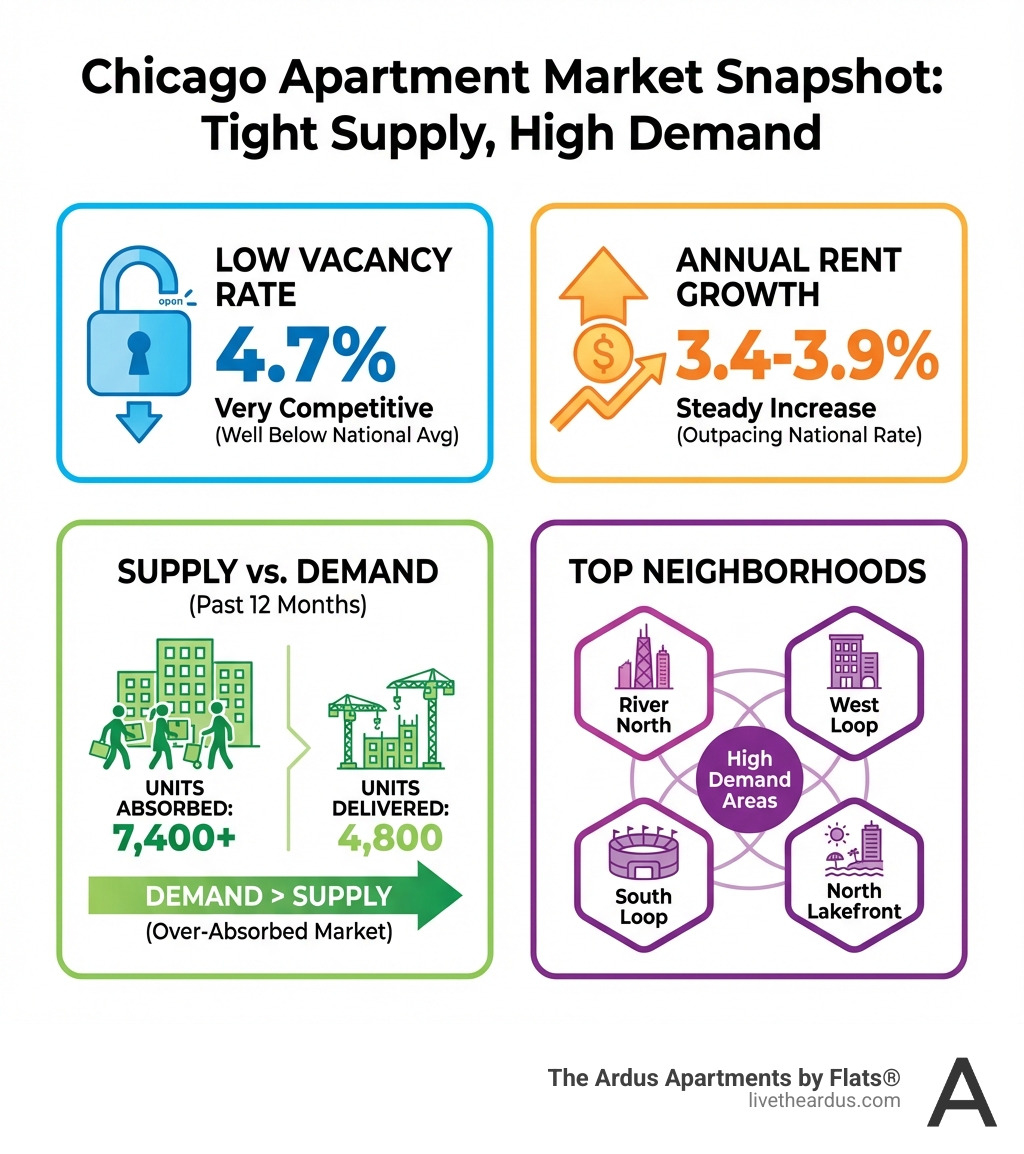
- Vacancy Rate: 4.7% (well below the national average of 8.4%)
- Annual Rent Growth: 3.4-3.9% (outpacing the national rate)
- Units Absorbed: Over 7,400 units in the past year
- New Deliveries: Only 4,800-6,734 units completed
- Top Neighborhoods: River North, West Loop, South Loop, and North Lakefront
If you're looking for an apartment in Chicago, you're entering a tight market where demand consistently outpaces supply. The city has maintained an "over-absorbed" status since 2021, meaning more people are moving into apartments than new units are being built.
Why is this happening? Chicago's rental market strength comes from limited new construction, a highly educated workforce, and a diverse economy that continues to draw residents to downtown neighborhoods. Development barriers and complex approval processes have kept inventory growth at about half the national rate over the past five years.
This guide will walk you through what's really happening in Chicago's apartment market—from neighborhood-by-neighborhood trends to the features renters value most. Whether you're relocating for work or simply looking for your next home, understanding these dynamics will help us steer your search with confidence.
The Current State of Chicago's Apartment Market
Chicago's apartment market is a fascinating blend of strong demand and constrained supply, creating a unique environment for renters and property owners alike. We’re seeing a robust market that consistently outperforms national trends, making it an exciting, albeit competitive, place to find your next home.

Understanding Current Chicago Apartment Vacancies
Let's explore the numbers. The current vacancy rate for apartments in Chicago stands at a tight 4.7%. To put that into perspective, the national average vacancy rate hovers around 8.4%. This significant difference tells us that Chicago's rental market is much tighter than most large U.S. cities, indicating strong demand and limited availability.
This tight market isn't a new phenomenon. Chicago has proudly maintained an "over-absorbed" status since 2021. What does "over-absorbed" mean? Simply put, it means that more people are moving into apartments than new units are being delivered to the market. Over the past year, Chicago absorbed over 7,400 units, while only 4,800 to 6,734 new units were completed. This imbalance means that available apartments are quickly snatched up, leading to fewer Chicago apartment vacancies.
We've also observed a steady downward trend in Chicago's vacancy rate since the first quarter of 2024, and it has remained lower than the national benchmark since mid-2022. This consistent performance underscores the market's resilience and the ongoing high demand for rental housing in our city. If you're curious about the deeper trends, you can explore detailed insights in the Chicago Multifamily Market Report.
How Chicago Compares to Other Major US Cities
When we look at Chicago's rental market in a broader context, it truly shines. Our city boasts one of the lowest vacancy rates among large U.S. markets, rivaled only by a few areas in Southern California and New York. This is a testament to Chicago's enduring appeal and economic strength.
While the nation has seen an upward trend in vacancy rates, reaching their highest since late 2012, Chicago has largely bucked this trend. Our market has held up remarkably well, with a first-quarter vacancy rate remaining steady even as the national average saw an increase. This resilience is largely due to steady demand and a unique set of circumstances that limit new construction.
In terms of rent growth, Chicago is also performing strongly. We’ve seen annual rent growth between 3.4% and 3.9%, which outpaces the national rate. In fact, some reports indicate that Chicago's average asking rent growth rate is approximately double the national average. This consistent outperformance in both vacancy and rent growth highlights Chicago's position as a robust and desirable rental market. Our city's investment momentum reflects this confidence, drawing significant interest from those who recognize its resilience and potential.
What's Driving Chicago Apartment Vacancies?
Understanding the forces behind Chicago's tight apartment market helps us appreciate why finding your ideal home here can be both rewarding and challenging. Several key factors, from economic strengths to unique development landscapes, contribute to the low number of Chicago apartment vacancies.
Key Economic and Demographic Factors
Chicago’s economic foundation is incredibly diverse and resilient, acting as a major magnet for residents. We’re a logistical powerhouse, a hub for manufacturing, and a leader in the Finance, Insurance, and Real Estate (FIRE) industries. This robust economic base supports a thriving job market across expanding sectors like life sciences, professional services, and advanced manufacturing. These industries draw talented individuals to our city, fueling the demand for housing.
Our workforce is also highly educated, with 43% of Chicago residents holding a bachelor's degree, significantly higher than the national average of 25%. This concentration of skilled professionals often translates into higher-income earners who seek quality rental housing, especially in vibrant downtown areas.
While the overall metro population might see some shifts, we've observed a clear migration pattern within the city: people are increasingly moving to downtown neighborhoods. Affluent pockets like Downtown and the Northshore report high median household incomes, showcasing a strong demand for rental properties in these areas. The Ardus Apartments, for example, offers modern living spaces in River North, attracting those who appreciate a blend of historical charm and contemporary features in a prime location. This trend of population shifts towards the urban core, driven by a highly educated, high-income workforce, is a primary reason for the persistent low Chicago apartment vacancies. For a deeper look into these trends, check out our insights on Chicago Downtown Rental Apartments.
The Impact of New Construction on Availability
One of the most significant factors influencing Chicago's apartment vacancies is the pace of new construction. Unlike many other major markets that have seen a surge in apartment deliveries, Chicago has experienced a significant slowdown in development. In fact, our city's inventory growth over the past five years has been roughly half the national rate.
Currently, only around 11,000 market-rate apartment units are under construction, representing about 1.9% of our total inventory. This is the lowest level of activity we've seen since 2012. This constrained supply is not accidental; it’s largely due to substantial barriers to development. Complex approval processes, local opposition (often referred to as NIMBYism), and increasing construction costs make it challenging to bring new projects to fruition. Many developers face tedious processes to get building permits, contributing to the limited new inventory.
While overall construction is slow, a significant portion of the new units underway—roughly 70%—are focused on luxury developments. This means that while high-end options are being added, the supply for other market segments remains particularly tight.
However, there's also an exciting trend emerging: office-to-residential conversions. Initiatives like the LaSalle Corridor Revitalization program, which has approved significant funding to redevelop obsolete downtown office buildings into apartments, are beginning to add new housing stock. These conversions are particularly interesting because they don't trigger the Affordable Requirements Ordinance (ARO), which mandates a percentage of affordable units in new developments. This could encourage more inventory growth through the repurposing of existing structures. Mayor Brandon Johnson's 'Cut the Tape' initiative is also aimed at streamlining development, which we hope will further ease the supply constraints. To learn more about the latest developments, including our own, you can visit our page on New River North Apartments.
A Look Across Chicago's Neighborhoods
Chicago is a city of distinct neighborhoods, each offering its own unique flavor and rental market dynamics. While the overall market for Chicago apartment vacancies is tight, understanding these local variations can significantly help us narrow down our search.

High-Demand Areas and Their Characteristics
Certain Chicago neighborhoods consistently stand out for their high demand and vibrant urban living. These areas are often characterized by excellent walkability, robust public transit access, and a plethora of dining, entertainment, and cultural options.
River North: This is where we thrive! River North is known for sophisticated dining, cultural experiences, and a busy nightlife. It offers convenient access to landmarks like the House of Blues and the Wrigley Building. Apartments here are sought after for their prime location and luxury amenities. If you're looking for an apartment in this dynamic area, our River North Apartment Rentals page is a great resource.
West Loop: With an electric energy, the West Loop is celebrated for its innovative restaurants, creative workspaces, and a unique blend of industrial history with modern design. It's a hotspot for foodies and professionals alike.
South Loop: Offering a balance of urban excitement and serene lakefront access, the South Loop is perfect for those who enjoy exploring historic areas like Printer's Row one minute and jogging along the lakefront the next.
Streeterville: Here, you can expect stunning Lake Michigan views and proximity to world-class shopping, as well as easy access to the peaceful lakefront trail.
Fulton Market: Rapidly growing, Fulton Market is changing with new tech parks and a reputation as a cutting-edge urban center. You can find more details about this evolving area on our Chicago Fulton Market page.
These neighborhoods, along with Downtown Chicago and the North Lakefront, consistently show strong absorption rates and often higher rent growth. The premium for apartments near public transit, such as an L station, can be 10-15% higher, reflecting the high value placed on connectivity and avoiding car ownership. Even certain suburban markets, like McHenry and Kendall County, and Northwest Lake County, have seen impressive gains in demand.
Exploring Different Apartment Styles
Chicago's architectural heritage and modern development mean you can find a diverse range of apartment styles to suit almost any taste. When navigating Chicago apartment vacancies, it's helpful to know what types of homes are available:
High-Rise Buildings: Dominating the skyline, particularly in downtown areas, these buildings offer panoramic city views and often come with a suite of luxury amenities. Many of Chicago's rental communities are high-rise buildings, known for their modern features and convenient locations.
Loft Apartments: For those who appreciate industrial charm, loft apartments, often converted from historic warehouses, offer open layouts, high ceilings, and exposed brick. Our Warehouse-Style Apartments Chicago and Chicago Loft Rentals pages showcase these unique spaces.
Vintage Apartments: These buildings, often found in tree-lined neighborhoods, boast classic architecture and character. Many have been beautifully renovated to include modern conveniences while retaining their historic appeal. If you're drawn to homes with a story, check out Chicago Apartments with Character.
New Construction: These properties offer the latest in design, technology, and amenities, often featuring smart-home capabilities and contemporary finishes. For those seeking the newest options, our Modern River North Apartments Ultimate Guide can provide insights.
Whether you're looking for a cozy studio or a spacious two-bedroom, Chicago has a style for you.
Renter Preferences and In-Demand Features
In Chicago's competitive rental market, understanding what features and amenities are most sought-after can give us an edge in finding the perfect home. Renters today are looking beyond just a place to sleep; they desire a lifestyle.
Most Sought-After Building Amenities
When searching for apartments in Chicago, certain building amenities consistently rank high on renters' wish lists. These features improve daily living and contribute to a vibrant community experience:
Rooftop Decks and Lounges: There's nothing quite like enjoying a Chicago sunset or skyline view from a beautifully designed rooftop space. These often include grilling areas, fire pits, and comfortable seating, making them perfect for socializing or unwinding. Explore options with amazing views on our Apartments with Rooftop Access page.
Fitness Centers: A well-equipped, on-site fitness center is a huge draw, allowing residents to maintain their wellness routines without leaving home. We understand the importance of convenience, which is why many modern buildings feature state-of-the-art gyms. Find your fit with our guide to Apartments with Fitness Center.
Co-Working Lounges: With the rise of remote and hybrid work, dedicated co-working spaces within apartment buildings have become essential. These areas provide a professional environment for residents to focus, collaborate, and connect. For those who work from home, consider our recommendations for Apartments for Remote Workers.
Package Receiving and Storage: In a busy city, secure package receiving and ample storage options are highly valued conveniences.
Bicycle Storage: Chicago is increasingly bike-friendly, and secure indoor bicycle storage, often with maintenance stations, is a must-have for cyclists. Learn more about apartments catering to this need on our Apartments with Bike Storage page.
Concierge Services and Lifestyle Programming: Many luxury buildings offer concierge services to assist with various needs, alongside curated lifestyle programming that fosters a sense of community among residents.
Tech-Forward Living: Modern renters appreciate smart home technology, including keyless entry, smart thermostats, and even EV charging stations for electric vehicles.
Popular In-Unit Features and Pet Considerations
Beyond building amenities, the features within our individual apartments play a crucial role in our daily comfort and satisfaction.
- In-Unit Laundry: This is consistently one of the most desired features, offering unparalleled convenience.
- Stainless Steel Appliances and Modern Kitchens: Sleek, functional kitchens are a top priority for many renters.
- Balconies: Private outdoor spaces, especially those with city views, are highly sought after. If you dream of sipping coffee with a view, explore our Chicago Apartments with Balconies options.
- Floor-to-Ceiling Windows and Hardwood Floors: These features maximize natural light and create a sense of spaciousness and modern elegance.
- Climate Control: Individually controlled heating and air conditioning ensure year-round comfort.
For many of us, our furry friends are part of the family, making pet-friendly policies a critical factor. Downtown Chicago has become wonderfully pet-friendly, with most newer buildings welcoming pets. We understand the importance of accommodating our four-legged residents.
- Pet-Friendly Policies: Most buildings allow pets, though they typically require a pet deposit and may charge monthly pet rent.
- Pet Amenities: Many buildings now offer fantastic amenities for pets, such as on-site dog runs, dog spas, and grooming stations.
- Pet Limits: Typically, buildings limit residents to two pets per apartment. Weight limits and breed restrictions may still apply in some properties. For detailed information on accommodating your pets, our Apartment Complex Pet Friendly guide is a great resource.
By understanding these preferences, we can better target our search for available Chicago apartment vacancies and find a home that truly fits our lifestyle.
Frequently Asked Questions about Chicago's Rental Market
Navigating Chicago's vibrant but competitive rental market can bring up a lot of questions. We've compiled some of the most common inquiries to help you better understand the landscape of Chicago apartment vacancies and what to expect.
What apartment floorplans are most common in Chicago?
Chicago's rental market offers a variety of floorplans, but some sizes are more prevalent than others:
- One-Bedroom Apartments: These make up the largest share of the market, accounting for approximately 51% of total apartments in the city. They offer a good balance of space and privacy for one or two people.
- Studio Apartments: Representing about 22% of units for rent, studios are a popular choice for urban dwellers seeking efficient living spaces. Chicago even has a specialty called "convertible studios," which offer a bit more privacy without the full one-bedroom price tag. You can explore these options on our Studio Apartments Chicago page.
- Two-Bedroom Apartments: These comprise around 21% of all rentals. Many newer buildings feature "split-plan" two-bedroom layouts, with bedrooms on opposite sides of the living area, often with soundproof walls, which is ideal for roommates seeking privacy.
- Three-Bedroom and Larger: While available, these are less common, making up a smaller percentage of the overall market.
Understanding these floorplan prevalence statistics can help us manage our expectations and focus our search effectively.
How has the vacancy rate changed in recent years?
Chicago's apartment vacancy rate has shown a remarkable trend in recent years, especially when compared to national figures. We've observed a steady downward trend in our city's vacancy rate since the first quarter of 2024. This is a significant shift, as the national vacancy rate has been on an upward trajectory since late 2012.
Our market has maintained an "over-absorbed" status since 2021, meaning demand has consistently outpaced supply. This has kept our vacancy rates lower than the national benchmark since mid-2022. While the national average has climbed, Chicago's tighter market conditions, largely due to limited new construction, have prevented a similar rise here.
Historically, Chicago has outperformed national averages in terms of vacancy. The unique development barriers in our city have countered the national trend toward overbuilding apartments, resulting in a structural vacancy that is now significantly lower than pre-pandemic levels. This steady decline means that finding available Chicago apartment vacancies requires diligence and quick action.
What is the forecast for Chicago's apartment market?
Looking ahead, the forecast for Chicago's apartment market suggests continued strength and resilience. We anticipate sustained rent growth and persistently low vacancy rates in the near future.
- Projected Rent Growth: The forecast calls for effective rent growth of 4.6% in the Chicago metro area this year, compared to a national projection of 2.5%. This indicates that Chicago's rents are expected to continue their strong upward trajectory, outpacing many other major cities.
- Continued Low Vacancy: The limited new construction pipeline is a key factor here. With only about 1.4% of our total inventory currently under construction (compared to a national benchmark of 3.2%), we don't foresee a significant influx of new units that would drastically increase Chicago apartment vacancies. This constrained supply will likely keep the market tight.
- Impact of Limited Construction: While this means fewer options for renters, it also contributes to strong long-term fundamentals for the market. Property values and rental income remain steady, which is attractive to investors and ensures the continued quality of the housing stock.
- Market Resilience: Chicago's diversified economy, highly educated workforce, and concentration of high-income earners provide a solid foundation for the rental market. These demographic and economic strengths are expected to continue driving demand, ensuring the market's resilience.
While the national apartment market may see an upward trend in vacancy over the next few years, Chicago's unique circumstances, particularly its development barriers, position it for continued resilience and a competitive environment for renters.
Conclusion
Navigating the landscape of Chicago apartment vacancies requires a clear understanding of our city's unique rental market. What we've seen is a market characterized by tight supply, robust demand, and a consistent outperformance of national trends. Our city's strong, diversified economy, highly educated workforce, and significant barriers to new construction all contribute to a competitive environment where available apartments are quickly absorbed.
From the vibrant streets of River North and the West Loop to the classic charm of vintage buildings and the sleek lines of new construction, Chicago offers a diverse array of living spaces. Renters today are seeking not just an apartment, but a lifestyle, prioritizing amenities like rooftop lounges, fitness centers, co-working spaces, and pet-friendly policies.
For us, understanding these dynamics is crucial. It helps us prepare effectively, whether we're seasoned city dwellers or new to the Chicago scene. By knowing what drives demand, where the hot neighborhoods are, and what features are most sought-after, we can approach our apartment search with confidence and clarity.
At The Ardus Apartments by Flats®, we pride ourselves on offering modern living spaces that blend historical charm with contemporary features in the heart of River North. We understand the market and are here to help you find a place that feels like home.
Ready to explore your options in one of Chicago's most dynamic neighborhoods? Find your next one-bedroom apartment in River North with us.